



LATEST NEWS
Outboard Motors: Guide to Choosing and Using an Outboard
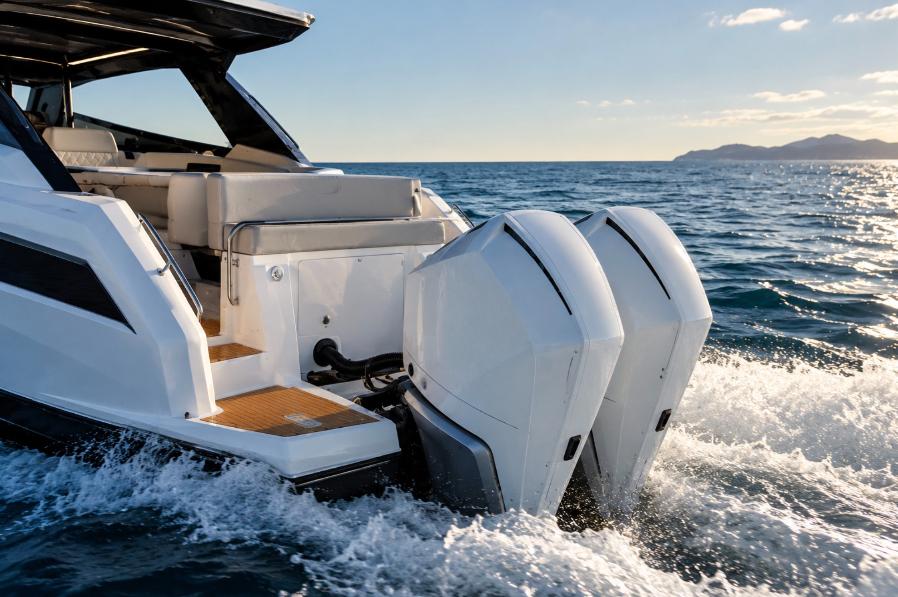
A suitable outboard directly impacts power, efficiency, safety, and the overall onboard experience.
On boats equipped with this type of propulsion, choosing the right engine involves much more than simply considering its rated horsepower.
Boat weight, hull configuration, expected load, boating profile, and manufacturer specifications all influence performance.
In this guide, NX Boats explains the key aspects of outboard propulsion and what to consider before making your choice.
What Is an Outboard Motor?
An outboard motor is a propulsion system installed externally on the stern of a boat. In a single unit, it combines the engine, transmission, propeller, and steering system.
This configuration preserves interior space that would otherwise be dedicated to an engine room. It also provides easier access to the mechanical components for inspections and manufacturer-recommended servicing.
Outboard propulsion is suitable for everything from compact boats to larger motorboats, depending on the horsepower and configuration selected. Twin- or multi-engine setups expand the possibilities for boats that require higher levels of performance.
How Does an Outboard Motor Work?
In a combustion-powered outboard, the engine converts fuel energy into mechanical energy. This power is transferred to the propeller through the transmission system, generating the thrust needed to move the boat through the water.
The outboard also plays a role in steering. As the engine turns from side to side, it changes the direction of the thrust, allowing the driver to control the boat’s course.
Another important feature is trim, which adjusts the angle of the engine in relation to the hull. Proper trim affects the boat’s running attitude, acceleration, efficiency, and the excellent handling expected from a well-configured boat.
What Are the Main Parts of an Outboard Motor?
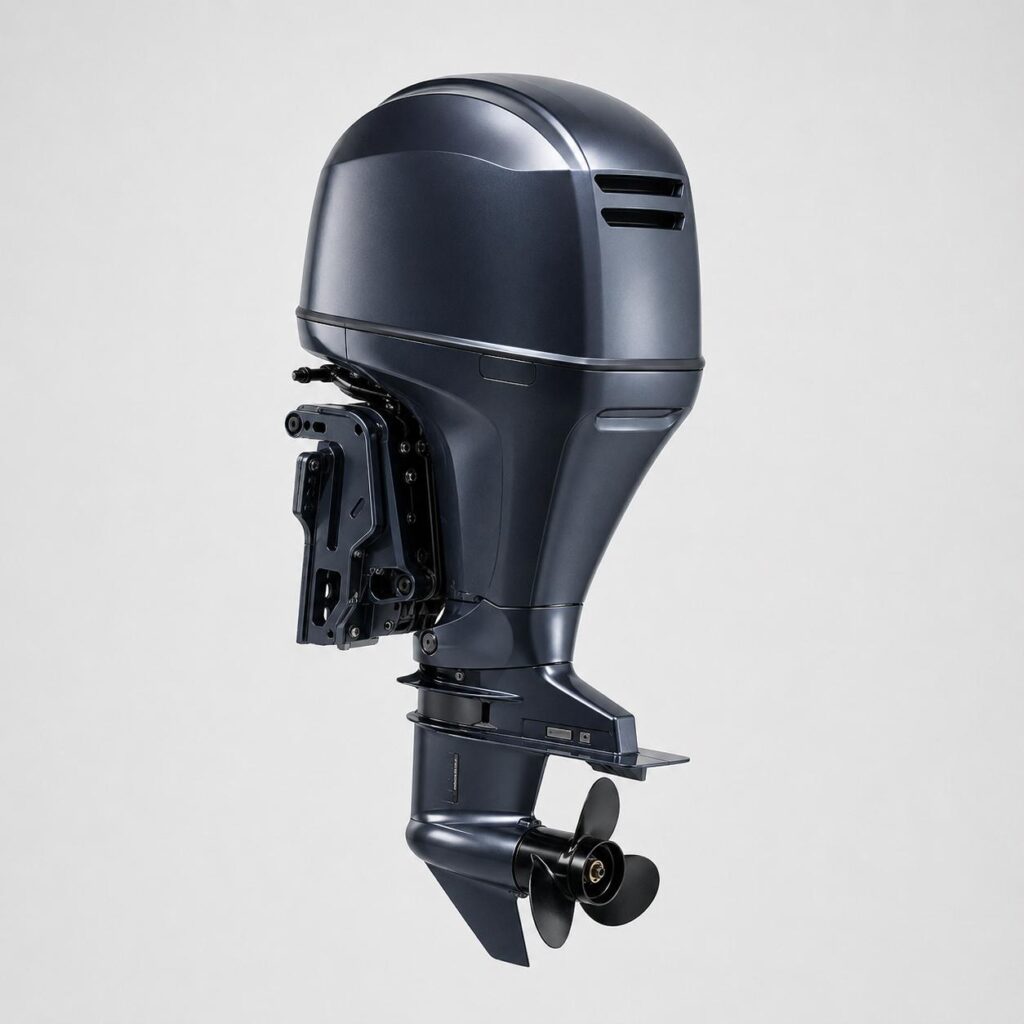
Although their construction varies depending on the manufacturer, horsepower, and technology, outboard motors share several essential components. Here are the main ones:
- Powerhead: houses the engine and the main components responsible for generating power.
- Midsection: connects the powerhead to the lower unit and houses structural and transmission components.
- Lower unit: contains the gears and transfers power to the propeller.
- Propeller: converts shaft rotation into thrust.
- Trim and tilt system: allows the engine angle and its position relative to the water to be adjusted.
What Are the Different Types of Outboard Motors?
Outboard motors are generally available in fuel-powered and electric versions.
Fuel-powered options include 2-stroke and 4-stroke engines, each with different characteristics in terms of weight, fuel efficiency, maintenance, and performance.
The best option will depend on the boat, the required power, and how it will be used.
2-Stroke Outboard Motors
2-stroke outboards are typically lighter, more affordable upfront, and simpler to maintain. These advantages can make them a good fit for boats where low weight and quick response are priorities.
However, they usually consume more fuel and generate more emissions than 4-stroke engines. Before choosing this type of motor, it is important to consider the boat’s size, intended use, and expected operating conditions.
4-Stroke Outboard Motors
4-stroke outboards are known for better fuel economy, lower emissions, and longer service life when compared with many 2-stroke alternatives.
Because they use a separate lubrication system, they also tend to provide cleaner and more efficient operation. This makes them especially suitable for recreational boating, tourism, and longer-distance cruising.
Electric Outboard Motors
Electric outboards rely on battery power to drive the propeller, providing quiet operation, no direct exhaust emissions, and relatively low maintenance needs.
Their main limitations may include shorter range, lower available power, and a higher purchase price than some combustion engines.
Even so, they can be an excellent option for applications where quiet performance, reduced environmental impact, and cleaner waterways are important.
What Are the Advantages of Outboard Motors?
The popularity of outboard motors comes from their combination of performance, integration, and design flexibility. Their main benefits include:
- A wide range of available horsepower options;
- Easy access for inspection and maintenance;
- The possibility of using multiple-engine configurations;
- More interior space compared with some inboard installations;
- Precise response during maneuvering;
- Integration with electronic control systems and driver-assistance technologies.
What Is the Best Outboard Motor for Your Type of Boat?
There is no single outboard that is ideal for every boat. The appropriate horsepower should always stay within the limits established by the boat manufacturer and match the structural characteristics of the design.
A boat intended for coastal cruising, for example, may require a different setup from one designed to carry heavier loads, support water sports, or cover longer distances.
It is also important to consider the boat’s total operating weight. Fuel, water, passengers, equipment, and accessories all add to the load and can affect acceleration, speed, range, and overall hull performance.
On NX Boats models, the integration between hull design and propulsion is considered from the earliest stages of development. The goal is to maintain performance, comfort, refined finishes, and excellent handling within the configurations specified for each model.
What to Consider Before Buying an Outboard Motor
Before choosing an outboard, it is important to consider the boat’s characteristics, intended use, and propulsion requirements. Horsepower alone does not determine the most suitable setup.
Key factors to consider include:
- the recommended horsepower range for the boat;
- engine weight and compatibility with the boat’s structure;
- intended use, such as leisure cruising, fishing, or water sports;
- fuel consumption;
- maintenance requirements;
- total operating weight of the boat;
- the relationship between engine power and boat size.
These factors help determine a setup that matches the boat’s intended use. Larger boats, for example, generally require more power, while engine weight can also affect performance and handling.
Conclusion
Choosing an outboard requires balancing horsepower, weight, efficiency, range, and compatibility with the boat. The right decision should always be based on the vessel’s specifications and intended use.
2-stroke, 4-stroke, and electric motors each offer different characteristics. More important than choosing a specific technology on its own is understanding how it integrates with the hull, weight distribution, and the onboard experience you want to achieve.
At NX Boats, propulsion, contemporary design, comfort, and handling are treated as parts of a single system.
This integration makes it possible to create boats that combine strong performance with a premium experience on the water.
FAQ
What Is the Difference Between an Outboard and an Inboard Motor?
O outboard fica instalado externamente na popa e reúne propulsão e direção em um conjunto integrado. O inboard fica dentro do casco e utiliza uma arquitetura de transmissão diferente, conforme o projeto.
What Is the Most Fuel-Efficient Outboard Motor?
An electric outboard motor is the most economical to operate because it does not use fuel. Among fuel-powered options, 4-stroke outboard motors generally offer better fuel efficiency than 2-stroke models.
How Long Does an Outboard Motor Last?
The lifespan of an outboard motor varies depending on use and maintenance, but it can last more than 10 years with regular preventive care and proper operating conditions.

Um novo mundo está surgindo, e a NX Boats faz parte dessa mudança, estamos revolucionando o design, unindo conforto e modernidade tudo isso por que queremos proporcionar a melhor experiência para quem navega com uma NX.