



LATEST NEWS
Marinas: How They Work and How to Choose the Best One
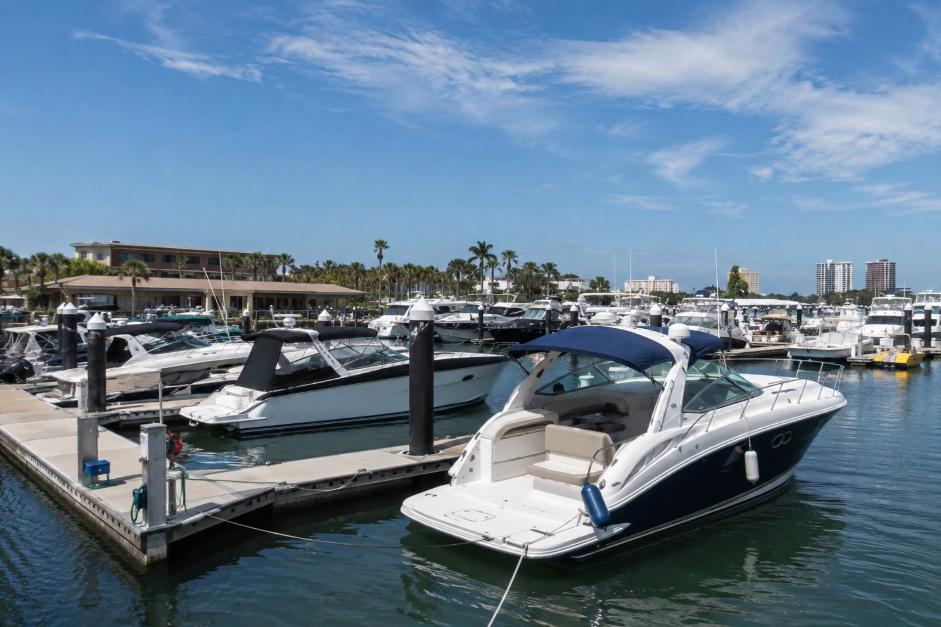
Thinking of docking your boat for the first time? Curious about costs, services, safety rules, or even whether marinas own the water they sit on? With so many options across the U.S., choosing the right marina can feel overwhelming, especially for new boat owners.
A marina is far more than a parking space on the water. It’s a service hub, a support center, and in many cases, a welcoming community for boaters.
The right marina can simplify maintenance, enhance safety, and make every outing smoother and more enjoyable.
In this guide, we’ll explain what marinas are, how they operate, what services they offer, and what you should consider before choosing one.
Whether you’re searching for marinas near you, comparing prices, or getting ready for your first arrival, you’ll find everything you need here.
What is a marina?
A marina is a waterfront facility designed to accommodate recreational boats and yachts. Unlike commercial ports — which receive cargo ships, ferries, and industrial vessels —, marinas exclusively serve leisure boating.
Marinas provide protected spaces for mooring and docking, along with services such as fueling, maintenance, storage, and provisioning. They are usually located in sheltered areas such as harbors, rivers, inland waterways, bays, or man-made basins.
What does a marina do?
A marina’s main purpose is to provide safe, convenient, and accessible dockage for boats. Beyond storage, marinas support boat owners with:
- access to utilities like water and power;
- fueling services;
- vessel maintenance;
- dry storage;
- sanitation facilities;
- supplies and provisioning.
What is considered a marina?
Any recreational facility offering boat mooring, dockage, and essential boating services is considered a marina, whether small and simple or large and resort-style.
Enjoying the content? Take a moment to check out the NX260 Evolution by NX Boats!
Marina vs. Pier vs. Yacht Club: What Is the Difference?
Marina, pier, and yacht club are all places related to nautical activities, but there are some differences between them.
- Marina: A place where vessels, such as boats and yachts, can dock and have access to various services. Marinas typically offer facilities such as fuel, electricity, fresh water, and sometimes even restaurants and shops.
- Pier: Essentially a physical structure that extends from the shore out over the water, usually made of wood or concrete. It can be used for docking, boarding and disembarking, fishing, or recreational activities.
- Yacht club: An organization, often private, that provides its members with access to nautical and social facilities. In addition to docking facilities, yacht clubs often organize events, competitions, and social activities for their members.
An interesting point to mention in the text is that all three can exist in the same location. A yacht club can operate a marina, and that marina can have several piers.
Types of marinas
Marinas vary widely in size, structure, and purpose. The most common types include:
- Public marinas: operated by municipalities or state agencies, they typically offer standard services at accessible prices. They are ideal for local boaters and day trips;
- Private marinas: run by companies or yacht clubs, these facilities usually provide enhanced amenities, premium infrastructure, and long-term contracts;
- Dry stack or dry dock marinas: also known as “dry marinas,” these store boats in vertical racks out of the water, protecting vessels from corrosion, fouling, and UV exposure.
Attract the most unexpected stares in the marinas with the NX 340 Sport Coupé
Key infrastructure of a good marina
A quality marina offers more than slips. It provides infrastructure that ensures safety, easy maneuvering, and comfort.
Essential features include:
- Floating or fixed piers: stable platforms for boarding and docking;
- Wide fairways: space for safe maneuverability;
- Ramps and gangways: easy access regardless of tide;
- Travel lifts and cranes: for haul-outs, inspections, and repairs;
- Dry storage areas: racks or sheds for out-of-water storage;
- Adequate utilities: power pedestals, potable water, Wi-Fi;
- Waste management: pump-out stations and recycling;
- Security systems: cameras, controlled access, and on-site staff
Premium marinas also consider weather exposure, wave protection, and proximity to navigation channels.
Read more: What is a speedboat? Types, uses, and safety tips
Services offered by marinas
Marinas typically offer dockage, fueling, maintenance, sanitation, boat handling, and other services that support boat owners before and after a trip. Available facilities vary by location, with some marinas focused on essential amenities and others providing comprehensive support.
Dockage itself can include wet slips for longer stays and transient slips for visiting boats. Depending on the facility, boat owners may also have access to shore power, freshwater connections, fuel docks, and pump-out stations.
Common marina services and amenities include:
- wet slips and transient dockage;
- shore power and freshwater connections;
- gasoline and diesel fueling stations;
- mechanical maintenance and repairs;
- hull cleaning and professional detailing;
- boat lifting and haul-out services;
- pressure washing and winterization;
- sanitation pump-out stations;
- marine supply or chandlery stores;
- laundry facilities;
- provisioning and concierge assistance.
Not every marina provides the same infrastructure. When choosing one, consider your boat’s size, the type and length of stay, available utilities, fuel access, maintenance support, security, and the services you expect to use regularly.
What Types of Boat Slips Are Available at Marinas?
Marinas can offer different types of boat slips based on their dock design, water conditions, and the needs of the boats they serve. In general, a boat slip is a designated space in the water where a boat can remain docked.
Common types include:
- Fixed-dock slips: built alongside docks that stay at a fixed height, regardless of changes in the water level.
- Floating-dock slips: connected to docks that rise and fall with the water, which can make boarding more convenient in areas with changing tides or water levels.
- Finger-pier slips: include a narrow pier alongside part of the boat, providing easier access for boarding and securing dock lines.
- Slips with boat lifts: use a lift system to keep the boat above the water when it is not in use.
Marinas may also offer transient slips, which are intended for short stays rather than long-term dockage. These can be useful for boaters visiting a destination during a trip.
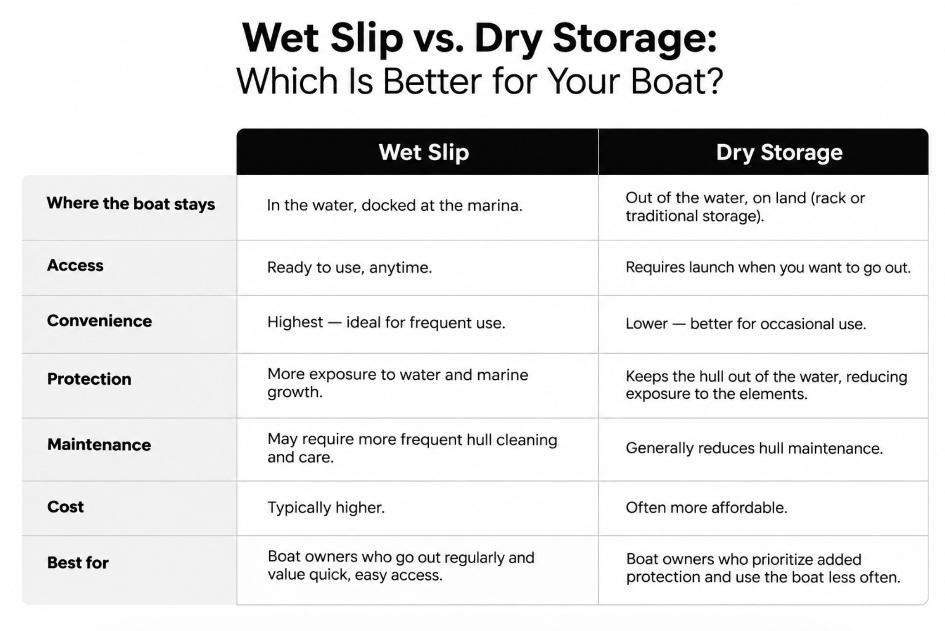
Some marinas also offer dry storage as an alternative to keeping your boat in a wet slip. In this case, the boat is stored out of the water and launched when needed.
Marinas with leisure facilities
Some marinas go beyond functionality and evolve into lifestyle destinations. They offer restaurants, fitness centers, swimming pools, lounges, and waterfront shops, creating a space where boaters can relax before or after navigating.
Across the U.S., several marinas stand out for combining functionality with resort-style amenities. Here are some examples:
- Bradford Marine (Fort Lauderdale): known for its massive covered dockage, crew lounge, project management teams, and upcoming luxury fitness center;
- Port 32 Marinas: locations like Fort Lauderdale and Lighthouse Point include restaurants, captain’s lounges, gyms, and concierge support;
- Safe Harbor Marinas network: many locations offer pools, tennis courts, clubhouses, and community events, blending marina operations with a club atmosphere.
Making reservations during peak season
During high season (particularly summer and holiday weekends) slip availability becomes limited. Here’s how to increase your chances of securing a space:
- Reserve early: popular marinas book out weeks or months in advance;
- Know your boat specs: length, beam, draft, and power needs determine available slips;
- Choose the right slip type: side-tie, slip, or mooring ball — each has different availability and pricing;
- Use reservation apps and sites: many U.S. marinas use online platforms for booking and check-in;
- Confirm arrival windows: some marinas enforce specific check-in times during busy periods.
Want to learn more about Open Deck Boats? Access our content
Costs involved
The cost of keeping your boat at a marina can vary widely depending on the location, the size of your vessel, the type of slip, and the level of service the facility provides.
Coastal marinas in high-demand areas typically charge more, while smaller inland marinas or public facilities may offer more accessible rates.
To give a general idea, some U.S. marinas charge daily transient rates around US$2 per foot, while monthly or seasonal wet-slip contracts may range from US$18 to US$22 per foot depending on the region and amenities.
Dry-stack storage, especially in hurricane-rated or climate-controlled facilities, typically costs more.
Legal & documentation requirements
If you’re navigating in the U.S., marinas may require:
- vessel registration;
- proof of insurance;
- compliance with local safety regulations;
- boating licenses where applicable;
- adherence to environmental rules (no discharge, waste disposal).
And no, marinas do not own the water; they lease waterfront property or operate under state and federal regulations.
And yes, a marina can hold your boat if fees are unpaid, following local lien laws.
How to choose the right marina for your boat
Choosing the right marina goes far beyond finding a place to dock. It’s about convenience, safety, and how well the location fits your boating routine.
Some boaters prioritize quick access to open water, others value quieter surroundings or strong on-site services. Understanding what matters most to you makes it easier to find a marina that truly supports your lifestyle.
Here are some key criteria to consider when comparing marinas:
- Type of boat: weight, size, draft, beam, and storage needs;
- Frequency of use: whether you’ll be on the water daily, weekly, or seasonally;
- Budget: slip fees, service charges, utilities, and potential long-term contracts;
- Location: distance from home and access to preferred cruising areas;
- Infrastructure: water depth, fairway width, haul-out capacity, and utilities;
- Security: controlled access, cameras, lighting, and on-site staff;
- Amenities: restaurants, lounges, shops, maintenance services, and leisure facilities;
- Safety: breakwaters, tide protection, storm-readiness, and emergency support.
Safety and Infrastructure: What Should You Look For?
A well-equipped marina should combine reliable infrastructure with clear safety measures. Before choosing one, look for:
- Well-maintained docks: Walkways should be stable, clean, and in good condition.
- Adequate lighting: Docks and access areas should be properly illuminated.
- Safe electrical systems: Power connections should be properly installed and maintained.
- Emergency procedures: Evacuation routes and emergency response protocols should be easy to understand.
- Security measures: Controlled access, surveillance, or on-site staff can provide an additional layer of protection.
- Essential utilities: Check the availability of potable water, pump-out facilities, and other services you expect to use.
The U.S. Fire Administration (USFA) recommends asking marina staff about the fire and emergency safety features available on-site, including smoke alarms and fire suppression equipment. This can help you understand how well prepared the facility is to respond to an incident.
The marina’s overall condition also matters. Clean walkways, organized facilities, and well-maintained equipment can provide useful insight into the quality of its management.
Boat Maintenance and Nautical Support Services
Access to professional maintenance can make boat ownership more convenient, especially when the marina has qualified technicians or works with specialized marine service providers.
The level of support varies, so it is worth checking what is available before choosing a facility.
Depending on the marina, nautical support may cover routine care as well as more specialized work, including:
- Engine and mechanical services: inspections, troubleshooting, repairs, and scheduled maintenance.
- Electrical support: assistance with batteries, onboard electrical systems, and related components.
- Hull and exterior care: cleaning, detailing, polishing, and other services that help preserve the boat’s condition.
- Haul-out and lifting: equipment to remove the boat from the water when inspection, maintenance, or repairs require access to the hull.
- Seasonal services: preparation for periods of storage or changing weather conditions, including winterization where necessary.
What to Consider Before Renting a Marina Slip
Once you have chosen a marina, the next step is to review the details of the slip rental itself. Lease terms, included services, access rules, and responsibilities can vary, so it is important to understand the agreement before committing.
Before renting a marina slip, check:
- Rental period: confirm whether the slip is available daily, monthly, seasonally, or through a long-term agreement.
- What is included: ask which utilities, services, or facilities are part of the rental.
- Additional fees: review charges for electricity, water, parking, guest access, or other services.
- Access rules: understand marina hours, gate access, parking policies, and any restrictions for visitors.
- Boat requirements: check whether insurance, registration, documentation, or specific equipment is required.
- Maintenance responsibilities: confirm what the marina handles and what remains the boat owner’s responsibility.
- Cancellation and renewal terms: review notice periods, renewal conditions, and any penalties that may apply.
- Slip assignment: ask whether the marina guarantees a specific slip or may relocate your boat when necessary.
Tips for first-time marina users
If it’s your first time docking at a marina, keep these tips in mind:
- Call ahead to confirm slip assignment;
- Review marina maps before entering the Fairway;
- Move slowly and follow no-wake rules;
- Communicate with dockhands for lines and power connections;
- Inspect the slip for depth, cleat positions, and fender requirements;
- Check out at the office or through the marina’s reservation app.
Preparation and clear communication make arrival and departure simple and safe!
Read more: How Fast Do Speedboats Go? Everything you need to know
Find the Right Boat for Your Boating Lifestyle
Choosing the right marina is part of creating a more practical and enjoyable boating routine.
The same applies to the boat itself, which should match how, where, and with whom you plan to navigate.
NX Boats combines contemporary design, refined finishes, performance, and comfort across a range of models created for different boating experiences.
Explore our luxury boats and discover which model best fits your lifestyle on the water.
Conclusion
Marinas play a central role in the boating lifestyle. They provide safe dockage, essential services, and a comfortable environment for leisure and community.
Understanding how marinas work helps you choose the right one for your vessel, budget, and needs.
Whether you’re searching for marinas close to you, comparing slip types, or preparing for your first docking, the best marina is the one that offers the right balance of infrastructure, services, and safety.
With the right knowledge (and the right boat) your marina stops become smoother, easier, and far more enjoyable!
Frequently Asked Questions About Marinas
Can You Refuel Your Boat at a Marina?
Yes, many marinas have fuel docks offering gasoline, diesel, or both. Availability varies by location, so check the fuel types and operating hours before your visit.
Do Marinas Provide Electricity and Water for Boats?
Many marinas provide shore power and freshwater connections directly at the slip. Electrical capacity and available utilities vary, so confirm that the connections are compatible with your boat.
Is It Better to Keep a Boat in the Water or in Dry Storage?
It depends on how you use your boat. A wet slip provides quick access to the water, while dry storage keeps the hull out of the water when the boat is not in use. Consider your boating frequency, local conditions, and maintenance needs when choosing.
Do Marinas Offer Boat Launch and Haul-Out Services?
Many full-service marinas provide boat launching and haul-out services using travel lifts, cranes, or other specialized equipment. Capacity varies, so check whether the facility can safely handle your boat’s dimensions and weight.
What Size Boat Can a Marina Accommodate?
It depends on the marina’s slips, water depth, fairways, and other infrastructure. Before reserving a space, provide your boat’s length, beam, draft, and other specifications requested by the marina.
Do You Need Insurance for a Boat Kept at a Marina?
Many marinas require boat owners to carry insurance before renting a slip or storage space. Requirements vary, including minimum liability coverage, so ask the marina what documentation and coverage limits apply.

Um novo mundo está surgindo, e a NX Boats faz parte dessa mudança, estamos revolucionando o design, unindo conforto e modernidade tudo isso por que queremos proporcionar a melhor experiência para quem navega com uma NX.