



LATEST NEWS
Yacht Maintenance: A Guide to Preserving Your Vessel’s Performance, Safety, and Value
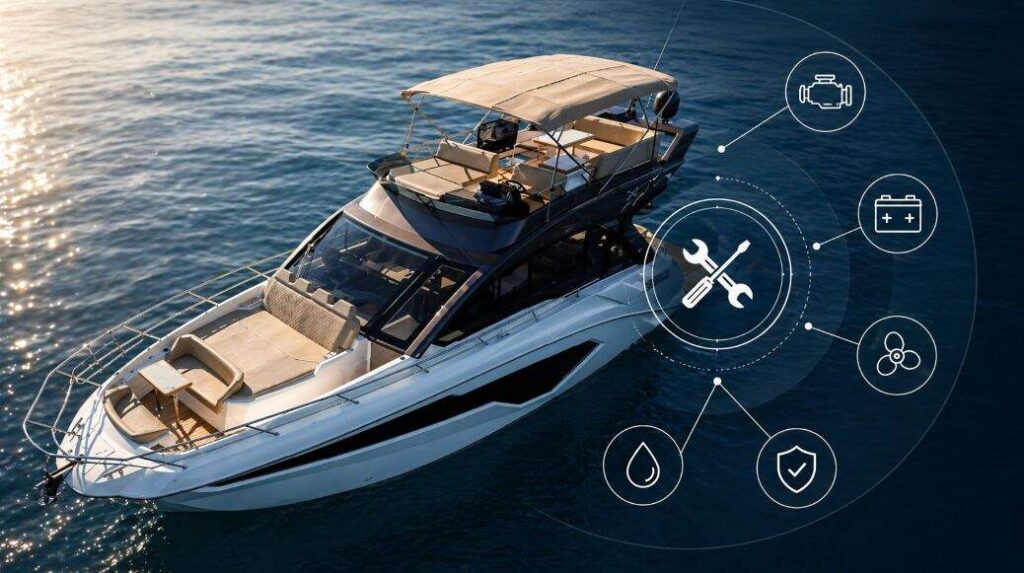
Yacht maintenance is the set of practices designed to ensure the safety, performance, and longevity of a vessel, regardless of its model, size, or frequency of use.
This guide was created for yacht owners who take the preservation of their nautical investment seriously.
Here, you will find technical recommendations, suggested maintenance intervals, and the main areas that require attention to keep your yacht in optimal condition — whether it is used for coastal cruising or longer passages.
Maintenance should not be seen as a cost. It is a direct investment in your family’s safety, your vessel’s performance, and the preservation of its value over time.
Neglecting it, on the other hand, can turn minor wear into serious and costly structural problems.
Below, you will find everything you need to know to keep your yacht performing at its best.
Why Yacht Maintenance Is Essential
A yacht operates in a naturally aggressive environment. The combination of saltwater, intense sunlight, temperature variations, and constant mechanical stress requires continuous attention to every onboard system.
According to guidelines from the American Boat and Yacht Council — ABYC, recreational vessels should undergo regular inspections to ensure compliance with safety and operational standards.
Beyond safety, proper maintenance preserves the structural integrity of the hull, the efficiency of the engines, and the quality of interior and exterior finishes.
A well-maintained yacht immediately reflects the owner’s commitment to the nautical lifestyle and to the overall onboard experience.
Yacht Maintenance: Preventive vs. Corrective Maintenance
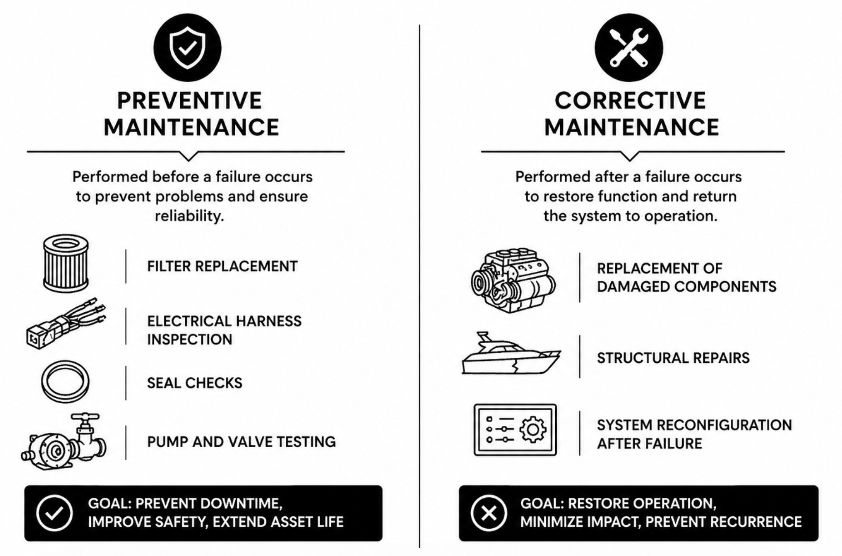
Preventive maintenance is performed before a failure occurs. It includes scheduled inspections, component replacements, and system testing. Its main purpose is to keep the yacht operating within its original design parameters.
Corrective maintenance, on the other hand, takes place after a failure has occurred. Although it may be unavoidable in some situations, it usually results in higher costs and vessel downtime.
In practice, the difference is clear:
Hull and Structural Care
The hull determines both hydrodynamic efficiency and structural safety. In vessels designed for excellent navigability, even small irregularities can affect fuel consumption, stability, and overall performance.
Periodic inspections help identify osmosis, cracks, and gelcoat wear. Applying antifouling paint reduces the buildup of marine organisms, helping preserve the vessel’s efficiency.
Before defining a maintenance routine, it is important to consider that exposure to different types of water may require adjustments to the maintenance plan.
Key items that deserve attention include:
- Integrity of the laminate and structural reinforcements.
- Condition of seals around through-hull fittings.
- State of the anchoring system and hardware.
- Inspection of swim platforms, stern platforms, and ladders.
Read more: Yachting tips for beginners: tips for starting with safety and confidence
Mechanical and Electrical Systems
Whether equipped with outboard or inboard engines, a yacht requires clear and consistent mechanical maintenance routines. Oil, filters, belts, propellers, and the cooling system all directly influence reliability.
In the electrical system, stability depends on batteries, chargers, wiring, and proper load distribution. Electrical failures can affect navigation, lighting, communication systems, and safety equipment.
Critical points include:
- Engines: oil changes, belt inspection, propeller checks, and alignment verification.
- Fuel system: tank cleaning, fuel line inspection, and water separator checks.
- Electrical system: battery testing, cable integrity, and corrosion protection.
- Electronics: navigation software updates and sensor calibration.
It is important to remember that each yacht model has its own manufacturer specifications, which should always be followed.
Cleaning and Preservation
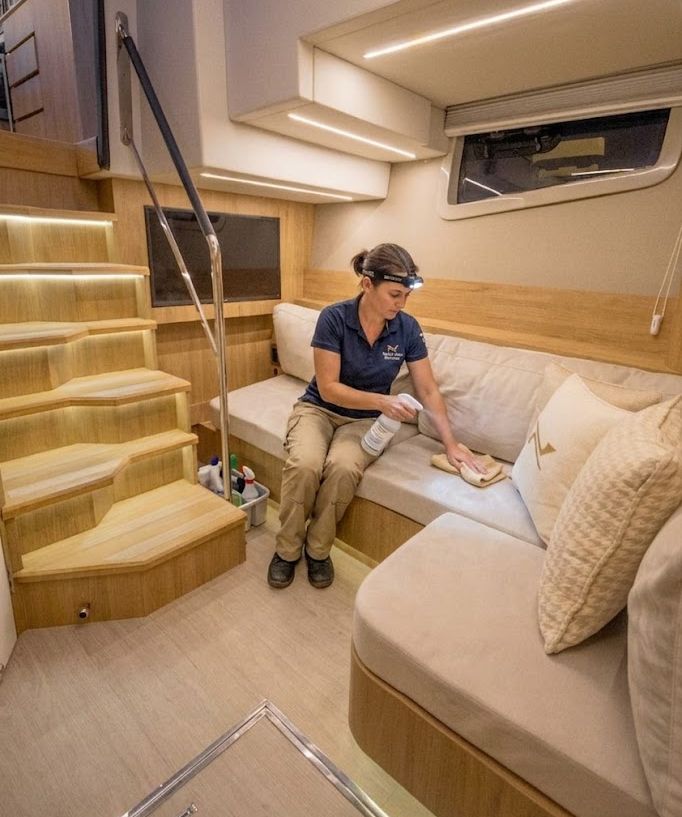
A cleaning routine goes far beyond aesthetics. Proper care extends the life of materials and protects high-value surfaces from premature wear.
Rinsing the yacht with fresh water after each outing is one of the simplest and most effective practices in any yacht maintenance routine. Residual salt accelerates metal corrosion, degrades plastics, and compromises gelcoat and painted finishes.
Marine upholstery, usually made from high-resistance vinyl or fabrics specifically designed for nautical environments, should be cleaned with appropriate products and protected from UV radiation when the vessel is not in use.
Protective covers for the cockpit, seats, and exposed areas are worthwhile investments, as they significantly slow down the wear of interior and exterior materials.
A well-preserved interior is one of the most important factors in maintaining a yacht’s resale value.
Recommended Yacht Maintenance Schedule
The ideal yacht maintenance schedule depends on hours of use, navigation conditions, and manufacturer specifications. A well-structured plan helps reduce unexpected issues and organize costs more efficiently.
Basic inspections should usually be performed monthly. More complete inspections typically follow quarterly, semiannual, or annual cycles.
As a practical guideline:
- Monthly: general visual inspection, cleaning, and fluid level checks.
- Quarterly: electrical system inspection and pump testing.
- Semiannually: engine servicing, filter replacement, and hull inspection.
- Annually: haul-out, antifouling paint application, and full structural inspection.
Read more: Yachting etiquette for beginners: essential rules for navigating with respect and safety
Costs Involved in Yacht Maintenance
The cost of yacht maintenance varies widely depending on the size of the vessel, the systems installed, and the frequency of use.
As a general reference, industry specialists often estimate that the annual maintenance cost of a yacht ranges between 10% and 15% of its market value.
This percentage may include specialized labor, materials, haul-out services, antifouling, mechanical and electrical inspections, and possible corrective repairs.
Yachts with more complex onboard systems — such as air conditioning, generators, integrated entertainment systems, and advanced navigation electronics — tend to have higher maintenance costs.
Financial planning for maintenance should be part of the purchase decision. Owners who consider this factor from the beginning tend to enjoy a much smoother and more predictable ownership experience.
Consequences of Poor Yacht Maintenance
The absence of a structured yacht maintenance routine gradually compromises all vessel systems.
The most common impacts include:
- Safety: Failures in engines, electrical systems, or structural components during navigation represent a real risk to crew and passengers. Many boating accidents recorded by authorities such as the U.S. Coast Guard have lack of preventive maintenance as one of their root causes.
- Performance: A hull with marine growth, engines with clogged filters, and damaged propellers directly reduce efficiency, increase fuel consumption, and compromise navigability.
- Costs: Emergency corrective repairs are often significantly more expensive than equivalent preventive maintenance. Structural damage caused by osmosis or galvanic corrosion, for example, may require extensive intervention.
- Depreciation: A yacht with a poorly documented or neglected maintenance history loses market value more quickly, making resale more difficult and reducing return on investment.
NX Boats: Vessels Designed to Last
At NX Boats, every vessel is developed with a focus on longevity, performance, and ease of maintenance.
The construction process uses selected materials, high-strength lamination, and integrated systems that facilitate technical access during inspections and servicing.
With a portfolio ranging from 26 to 62 feet, NX offers models for different usage profiles — from high-performance boats to yachts designed for longer-range cruising — all with refined finishes and excellent navigability.
Our technical team is available to guide owners on the recommended maintenance plans for each model.
Speak with an NX specialist and discover how to keep your vessel at a high standard for many years.
Conclusion
Yacht maintenance is an ongoing practice that protects your investment, ensures onboard safety, and preserves the navigation experience at the highest level.
Every inspection performed at the right time directly impacts the vessel’s longevity, performance, and market value.
Owners who adopt a structured yacht maintenance routine navigate with greater peace of mind, face fewer unexpected issues, and keep their yachts ready for any destination.
At NX Boats, we believe that taking proper care of a vessel is an essential part of nautical culture. And that care begins with reliable information.
You can also explore our content on what to consider when purchasing yacht insurance and learn how to protect your vessel with the right coverage for your navigation profile.
Frequently Asked Questions
What is the difference between preventive and corrective maintenance?
Preventive maintenance anticipates failures through scheduled inspections and planned replacements. Corrective maintenance is performed after a failure occurs and usually results in higher costs.
How often should I service my yacht?
It depends on usage, navigation conditions, and manufacturer recommendations. In general, maintenance routines may be monthly, quarterly, semiannual, and annual.
How can I reduce yacht maintenance costs?
The best way to reduce costs is through preventive planning, the use of recommended parts, and consistent technical records.
Does maintenance affect resale value?
Yes. A complete and well-documented maintenance history increases buyer confidence and helps preserve the yacht’s market value.
Can I perform yacht maintenance myself?
Simple tasks, such as cleaning and visual inspections, can be performed by the owner. However, mechanical, electrical, and structural inspections should be carried out by specialized technicians.

Um novo mundo está surgindo, e a NX Boats faz parte dessa mudança, estamos revolucionando o design, unindo conforto e modernidade tudo isso por que queremos proporcionar a melhor experiência para quem navega com uma NX.