



LATEST NEWS
Yacht Insurance: Asset Protection and Peace of Mind at Sea
Yacht insurance is one of the main concerns for those who value assets, safety, and predictability in the nautical environment.
When investing in a high-end vessel, protection against operational risks and unforeseen events becomes an essential part of the on-board experience.
Throughout this content, you will find a clear overview of how yacht insurance works, which coverages are most relevant, and what factors influence the contracting process.
We also address real-life claims situations, evaluation criteria, and key points that directly impact navigation safety and the preservation of your investment.
What Is Yacht Insurance
Yacht insurance is a contract that guarantees financial protection against damage, losses, or liabilities related to the vessel. It covers everything from structural incidents to damage caused to third parties.
This type of insurance takes into account specific characteristics of the nautical sector, including hull type, stern or inboard-outboard engine configuration, navigation area, and usage profile.
It operates on the classic logic of any insurance policy: the owner pays a periodic premium, and in the event of a claim (a covered event), the insurer covers the costs within the contracted limits. The difference lies in the depth of coverage and the specialization of the product.
Luxury yachts feature advanced navigation systems, high-performance engines, refined interior finishes, and on-board electronic equipment — all of which must be adequately covered in the policy.
Why Yacht Insurance Is Essential
Navigation involves variables not present with other assets. Weather conditions, maritime traffic, and docking operations require constant attention.
Even vessels with excellent seaworthiness and contemporary design are subject to risks. A collision in a marina, for example, can generate significant costs in a short period of time.
Here are the main reasons that reinforce the importance of insurance:
- Asset protection against structural damage
- Liability coverage in accidents involving third parties
- Support in salvage and towing situations
- Assistance during unexpected weather events
- Continuity of vessel use with minimal financial impact
This set of factors contributes to a safer and more predictable experience, both on short trips and longer itineraries.
Types of Coverage Available
Yacht insurance policies vary according to the profile of the owner and the vessel. Customization is a key factor, especially for models with refined finishes and sophisticated interior layouts.
Here is a breakdown of the main coverages.
Material Damage Coverage
Protects the hull, electrical, electronic, and mechanical systems against damage. Covers collisions, groundings, fires, and natural events.
This coverage typically considers the market value or agreed value of the vessel.
Liability Coverage
Covers damage caused to third parties, whether material or bodily. It is one of the most relevant coverages, especially in areas with high nautical traffic.
In marinas the risk of collisions during maneuvers requires special attention.
Theft and Burglary
Provides compensation in cases of total or partial theft of the vessel and its equipment. May include items such as navigation electronics and on-board accessories.
Assistance and Salvage
Includes towing services, support in the event of mechanical breakdown, and emergency assistance. On longer routes, this coverage provides additional peace of mind.
Coverage for Crew and Passengers
Some policies include personal accident protection on board. This coverage reinforces safety during trips with family or guests.
Damage, Accidents, and Liability: Understanding the Differences
It is important to distinguish these three pillars of yacht insurance coverage, as each one applies to different situations.
Damage refers to harm to the vessel itself, caused by accidents, weather, collisions, or structural failures. Compensation covers repair or replacement, depending on the type of loss (partial or total).
Accidents involve unforeseen events that may affect people and property, both on board and in the vicinity of the vessel. Personal accident coverage is essential to protect crew members and guests.
Liability comes into play when the vessel causes damage to third parties. Without this coverage, the owner is personally responsible for compensation that can be substantial, especially in cases of collision with other high-value vessels.
Organizations such as the International Maritime Organization establish guidelines that reinforce the importance of responsibility in navigation.
The Importance of Yacht Appraisal
Technical appraisal is one of the cornerstones of nautical insurance. It defines the insured value and ensures that coverage is aligned with the actual condition of the vessel.
This process is conducted by specialized appraisers who analyze the structure, systems, and equipment. The goal is to identify operational conditions and any potential risks.
For yachts with contemporary design and innovative solutions — such as integrated living spaces and advanced electronic systems — the appraisal must be even more thorough.
An up-to-date appraisal prevents discrepancies in the event of a claim and contributes to a more transparent contracting process.
Most Common Claims Situations
Understanding the most frequent claims helps owners better determine the coverage they need. Records from the nautical insurance sector indicate recurring situations in the following areas:
- Collisions and impacts: Most common in high-traffic areas such as coves, busy marinas, and access channels.
- Weather damage: Storms, swells, and strong winds can cause damage to the hull, deck equipment, and anchoring systems.
- Fire and explosion: Electrical system or engine failures are frequent causes of on-board fires, especially in vessels with combustion engines.
- Sinking: Can occur due to overloading, structural failure, collision, or extreme weather conditions.
- Equipment theft: Outboard motors, navigation equipment, and electronic items are the most common targets in marinas with limited access control.
- Damage during land transport: Moving the yacht on a trailer to a marina or boatyard is a vulnerable moment that should be covered in the policy.
Tips for Choosing the Right Yacht Insurance
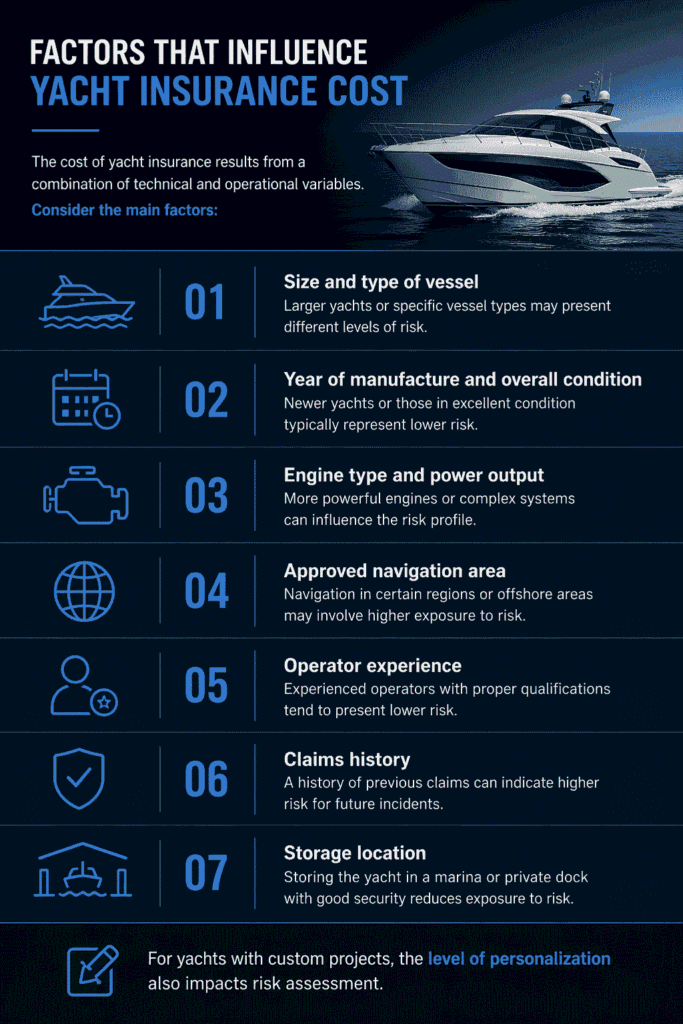
Selecting an appropriate yacht insurance policy requires attention to details that go beyond the premium amount. Here’s what to consider before signing the contract:
- Work with nautical-specialized brokers. Professionals with experience in the sector understand the nuances of policies and can recommend coverages that a generalist might overlook.
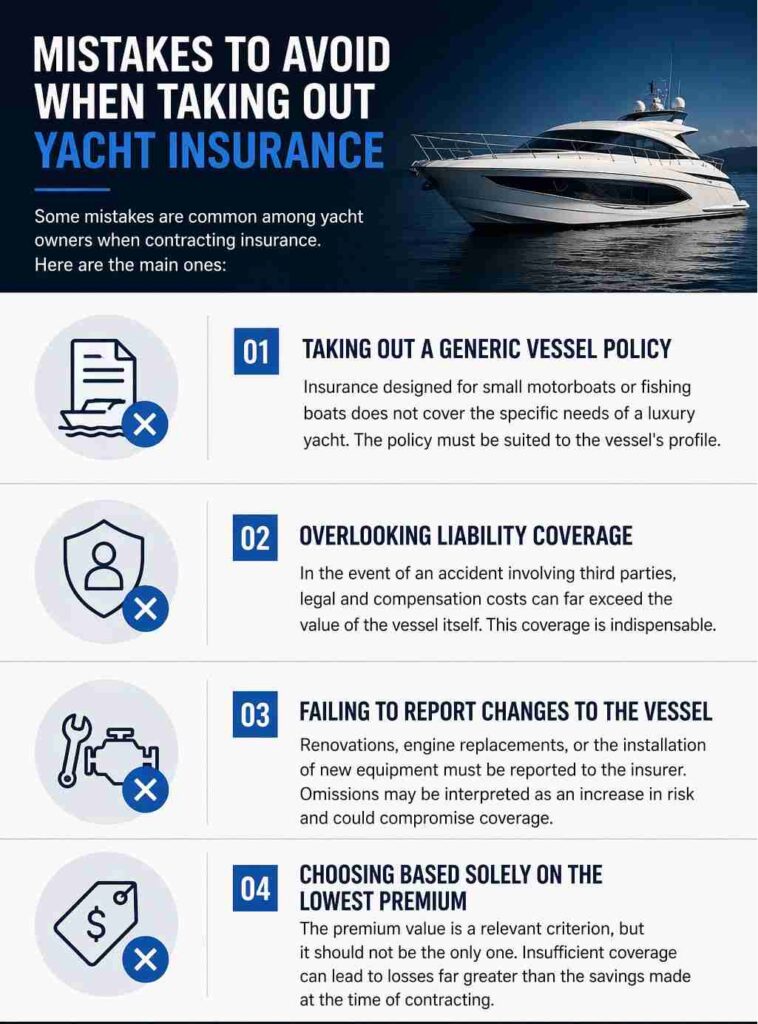
- Read the exclusion clauses carefully. Every policy has exclusions. Situations such as navigating outside the contracted area, undeclared commercial use of the vessel, or lack of nautical certification may void coverage.
- Declare the true value of the vessel. Undervaluation can result in insufficient compensation. Assess all installed equipment and customizations.
- Check the geographic coverage. For those who sail in international waters, it is essential to confirm whether the policy covers the regions of interest, such as the Caribbean, the Mediterranean, or the US East Coast.
- Review the policy annually. The market value of the yacht may change, and any improvements made on board must be reported to the insurer to keep coverage up to date.
- Consider additional coverage for high-value equipment. Entertainment systems, diving equipment, and on-board jet skis typically require specific coverage.
The NX Boats Experience and the Importance of Protection
At NX Boats, every vessel is designed with technical rigor, contemporary design, and refined craftsmanship that reflect a commitment to excellence.
With a portfolio ranging from 26 to 62 feet, NX offers models developed for different navigation profiles — from family leisure to long-distance passages.
We understand that protecting an NX yacht means protecting an asset built with purpose. That is why we guide our clients to seek policies that match the level of their investment, with comprehensive coverage and specialized support.
If you would like to explore the available models and find out which vessel best suits your navigation profile, browse the full NX Boats portfolio and speak with one of our specialists.
Frequently Asked Questions
Is yacht insurance mandatory?
The requirement varies depending on the legislation of each country and the rules of marinas and ports. In many international destinations, liability coverage is required for docking. Even where it is not mandatory, it is highly recommended.
What is total loss coverage in nautical insurance?
A total loss occurs when the damage to the vessel is so extensive that the cost of repair exceeds the insured value — generally above 75% of the declared value. In this case, the insurer compensates the owner for the full contracted amount.
Is my yacht covered during land transport?
It depends on the contracted policy. Some coverages include land transport of the vessel, such as the journey to a boatyard or marina. It is essential to verify this clause at the time of contracting.
Does insurance cover international navigation?
It depends on the policy. It is necessary to verify the contracted navigation area before undertaking international voyages.
Are additional equipment items included?
Items such as electronics and accessories may be included, provided they are declared at the time of contracting.
How often should I update my policy?
Whenever there are modifications to the vessel or a change in its usage profile.

Um novo mundo está surgindo, e a NX Boats faz parte dessa mudança, estamos revolucionando o design, unindo conforto e modernidade tudo isso por que queremos proporcionar a melhor experiência para quem navega com uma NX.