



LATEST NEWS
Jet Boat: Is It the Right Boat for You?
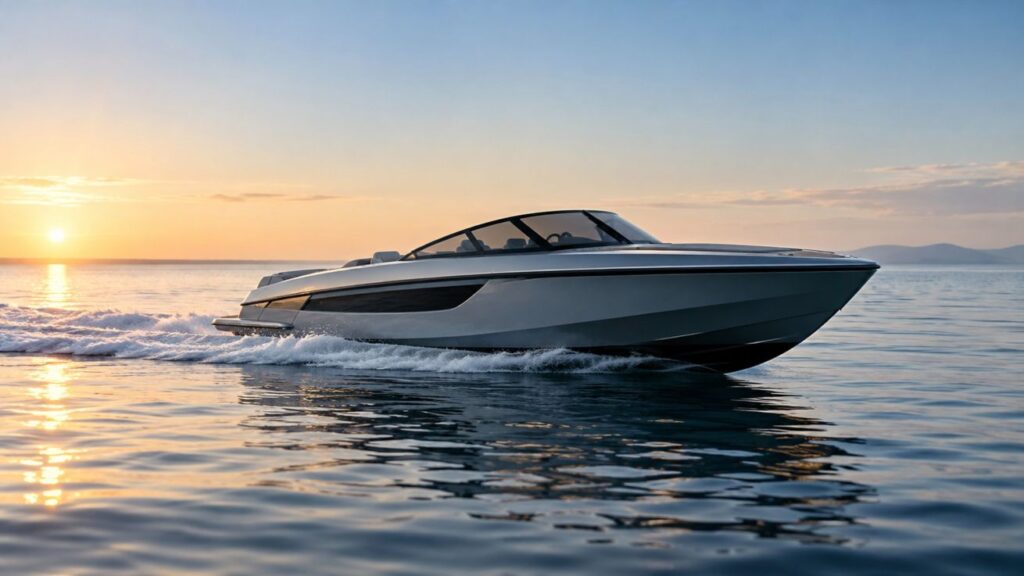
A jet boat stands out for its agility, shallow draft, and lack of an exposed propeller at the stern. These characteristics can offer important advantages, but they do not mean that this propulsion system is the right choice for every type of boating.
Before buying, consider practical factors such as where you plan to cruise, how much time you usually spend on the water, whether greater fuel range is a priority, and where you will have access to maintenance and technical support.
Understanding how a jet boat works is important. Knowing whether it fits your boating routine is even more important.
What Is a Jet Boat and How Does Jet Propulsion Work?
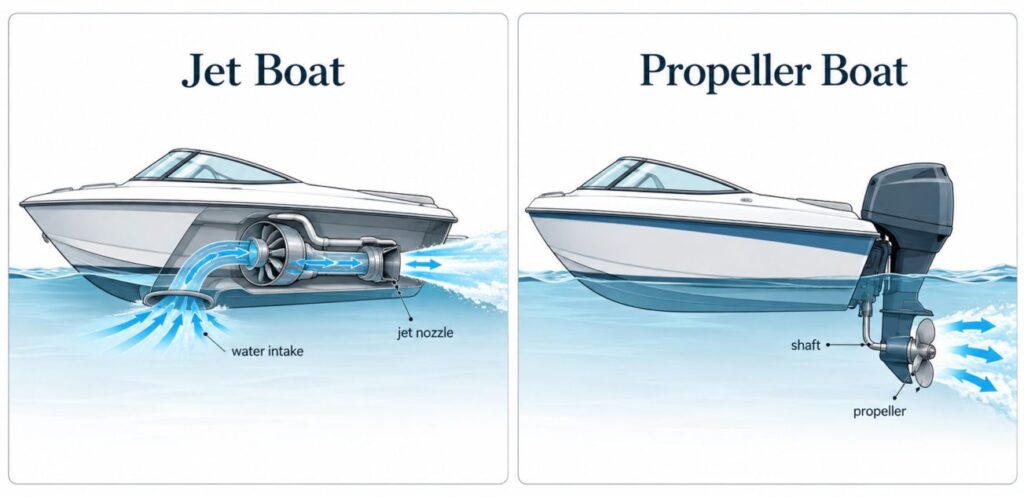
A jet boat does not use an external propeller to generate thrust. Instead, the system draws water through an intake beneath the hull, accelerates it internally, and expels it through the stern.
The force of this water jet propels the boat forward. To change direction, the system redirects the flow of water to one side or the other.
In practice, this configuration keeps the underside of the boat and the stern free from an exposed propeller, which is one of the main differences between jet propulsion and conventional propulsion systems.
Jet Boat vs. Propeller Boat: What’s the Difference?
The main difference lies in the propulsion system. A jet boat uses a high-pressure stream of water to generate thrust, while a conventional boat relies on a propeller.
This choice affects draft, handling characteristics, maintenance, and even how the owner can use the stern area.
| Feature | Jet Boat | Propeller Boat |
| Propulsion | Water jet | Propeller |
| Shallow water | Better suited to shallow-draft operation | Requires greater attention to water depth |
| Exposed propeller | No | Yes |
| Maintenance | Requires specific knowledge of the jet system | Service is generally more widely available |
The right choice depends less on which technology seems more advanced and more on where and how the boat will be used.
Is a Jet Boat Good for Shallow Water?
Yes. Shallow water is one of the situations where a jet boat can make a lot of sense.
Because it does not have a propeller extending below the hull, it can operate in shallower water than many conventional boats.
That does not mean you can navigate without caution. Very shallow areas may contain sand, rocks, vegetation, and other debris near the water intake.
Does a Jet Boat Use More Fuel Than a Conventional Boat?
Yes. A jet boat generally uses more fuel than a conventional propeller-driven boat.
This is because jet propulsion is typically less fuel-efficient than a traditional propeller system.
The engine may need to operate at higher RPMs and produce more horsepower to maintain a similar cruising speed.
Is It Harder to Find Jet Boat Service and Repairs?
In some regions, yes.
Jet propulsion systems use specific components and may require specialized service. For that reason, it is important to consider the availability of qualified support near your marina or in the areas where you typically cruise.
A boat may suit your needs very well, but it can become less practical if routine maintenance or repairs require long trips to reach specialized service.
Does a Jet Boat Have a Higher Risk of Overheating?
A jet boat can face a higher risk of overheating in certain conditions, particularly because its cooling system relies on a continuous flow of water drawn from the surrounding environment to cool the engine.
Jet propulsion uses an impeller that draws in large volumes of water. When operating in shallow water or areas with heavy vegetation, the system may also pull in sand, mud, weeds, or other debris.
These materials can block the intake grate or restrict the internal cooling passages. Without sufficient water flow, the engine can overheat quickly, making it important to monitor the intake and avoid debris-filled areas whenever possible.
Are Jet Boats Safer Around Swimmers?
Yes. Jet boats can be safer around swimmers because they use an internal jet propulsion system and do not have an exposed propeller, which removes the risk of serious cuts from propeller blades.
However, the risk is not completely eliminated. A jet boat can still cause serious injuries in a collision, and there are also potential hazards related to suction near the intake grate and the force of the water jet at the stern.
Are Jet Boats Harder to Maneuver for Beginners?
They can require an adjustment period, especially at low speeds.
A jet boat’s steering depends on the water flow created by the propulsion system. Because of this, its response during marina maneuvers can feel different for boaters who are used to conventional propeller-driven boats.
This difference does not necessarily make a jet boat difficult to handle, but it is worth considering if you value simple, predictable maneuvering from your first outings.
Do Jet Boats Handle Rough Water Well?
Jet boats generally do not perform as well in rough water and can become uncomfortable in those conditions. Their flatter hull designs tend to ride over waves rather than cut through them, which can increase impact and reduce comfort.
If the stern lifts out of the water, the jet intake may draw in air instead of water, causing a temporary loss of thrust and steering response. For this reason, jet boats are usually better suited to lakes, rivers, reservoirs, and calm coastal conditions.
Is a Jet Boat Worth It?
A jet boat can be worth it for boaters who frequently navigate shallow water, value a stern without an exposed propeller, and want a vessel suited to recreational use on lakes, rivers, or protected coastal areas.
However, it is not every owner’s preferred option. In Reddit discussions, some users report favoring propeller-driven boats after experiences with higher fuel consumption, maintenance requirements, or other characteristics of jet-drive systems.
The comment below reflects one of these perspectives and helps show how real-world use can influence the decision.
Comment
by u/Ok_Marketing_2691 from discussion
in boating
For those who prefer conventional propeller propulsion, NX Boats offers models that combine performance, comfort, contemporary design, and a range of configuration options.
Jet Boat Buying Checklist: 7 Questions to Ask Before You Buy
Before choosing a jet boat, consider whether the characteristics of this propulsion system truly match your boating routine. These seven questions can help you make a more practical decision:
| Ask yourself | A jet boat may be a good fit if… |
| 1. Where will I boat? | You mainly cruise on lakes, rivers, or protected coastal waters. |
| 2. Will I regularly navigate shallow water? | A shallow draft is an important advantage for your usual routes. |
| 3. How often will I use the boat? | You have already considered fuel consumption, maintenance, and overall operating costs throughout the year. |
| 4. Do I often swim or do watersports from the stern? | A stern without an exposed propeller is important for the way you use the boat. |
| 5. How important is fuel range? | Your typical routes are shorter and extended range is not a top priority. |
| 6. Is jet-drive service available nearby? | Specialized service is available near your marina or usual boating area. |
| 7. Am I willing to adapt to jet-drive handling? | You are comfortable with different handling characteristics during low-speed maneuvers. |
If shallow-water access, shorter trips, and frequent use of the stern area are priorities, a jet boat may be a good fit.
If you place greater importance on fuel range, widespread service availability, or already prefer the handling characteristics of a propeller-driven boat, it is worth comparing both options before making your purchase.

Um novo mundo está surgindo, e a NX Boats faz parte dessa mudança, estamos revolucionando o design, unindo conforto e modernidade tudo isso por que queremos proporcionar a melhor experiência para quem navega com uma NX.