



LATEST NEWS
What Safety Equipment Is Required on a Boat?
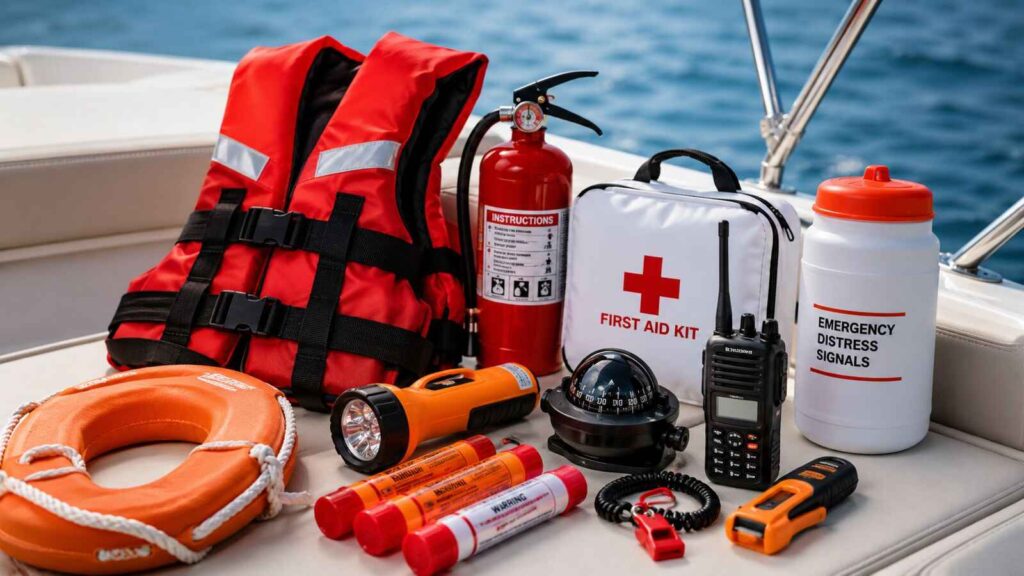
Boat safety equipment is one of the first things you need to check after buying a new boat.
And a common question comes up at this point: does a new boat already come with all the equipment you need to navigate safely?
Not always.
A new boat already comes with several factory-installed systems, including safety-related equipment. However, life jackets, emergency signaling devices, and other safety gear may need to be purchased separately.
In the United States, some of these items are also required by the U.S. Coast Guard (USCG). What you need to have onboard varies depending on the size and characteristics of your boat, as well as where you plan to operate it.
In this guide, we’ll simplify that preparation by explaining what typically comes with the boat, what you need to purchase separately, and what you should check before your first trip.
What Safety Equipment Is Required by Law?
In the United States, the U.S. Coast Guard (USCG) sets the minimum federal safety equipment requirements for recreational boats.
However, the required equipment varies based on factors such as the boat’s size and features, as well as where you plan to operate it. Each state may also have additional requirements.
Some of the main safety equipment covered by federal requirements includes:
- Life jackets: Your boat must have a USCG-approved life jacket for each person onboard. Each life jacket must be the right size for the wearer, in good condition, and easy to access.
- Throwable flotation device: Boats 16 feet or longer generally need a USCG-approved flotation device that can be thrown to someone in the water, in addition to wearable life jackets. Some exceptions apply, including canoes and kayaks.
- Fire extinguishers: These are required on certain boats, such as those with permanently installed fuel tanks or compartments where fuel vapors can accumulate. The number required depends on factors such as the boat’s length and whether it has a fixed fire-extinguishing system.
- Visual Distress Signals: Certain boats must carry approved equipment to signal an emergency when operating on coastal waters, the Great Lakes, territorial seas, and certain connected waters. Specific requirements and exceptions apply.
- Sound-Producing Devices and Navigation Lights: Federal rules also set requirements for sound-signaling equipment and navigation lights based on the type of boat and the conditions in which it operates.
- Engine Cut-Off Switch: Federal law requires operators of certain recreational boats under 26 feet to use the installed Engine Cut-Off Switch when operating under specified conditions.
What Comes Standard on a New Boat?
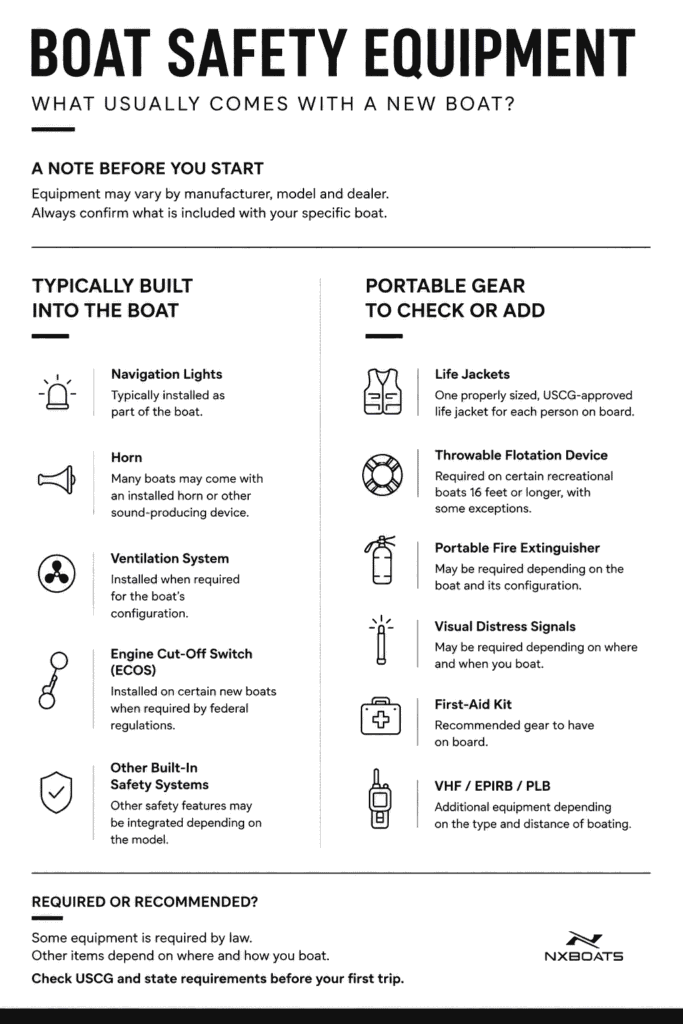
When you take delivery of a new boat, several essential systems are already part of the vessel.
Navigation lights are a good example. Electrical, fuel, and ventilation systems are also typically built into the boat when required for that particular model.
Some boats also include specific safety systems. The Engine Cut-Off Switch (ECOS), for example, can shut off the engine if the operator moves away from the controls under certain circumstances.
However, there is an important difference between what is part of the boat and what needs to be onboard before you leave the marina.
A life jacket, for example, depends on who will be joining you on the trip. If you head out with four people, you need to make sure there are appropriate life jackets for everyone onboard.
That is why, even when buying a new boat, you should confirm with the dealer which equipment is included with the delivery. This makes it easier to know what is already onboard and what you still need to purchase.
What Boat Safety Equipment Do You Need to Add?
Think about preparing for your first trip with your family. In addition to fuel, water, your route, and the weather forecast, there are some safety items that should be on your checklist.
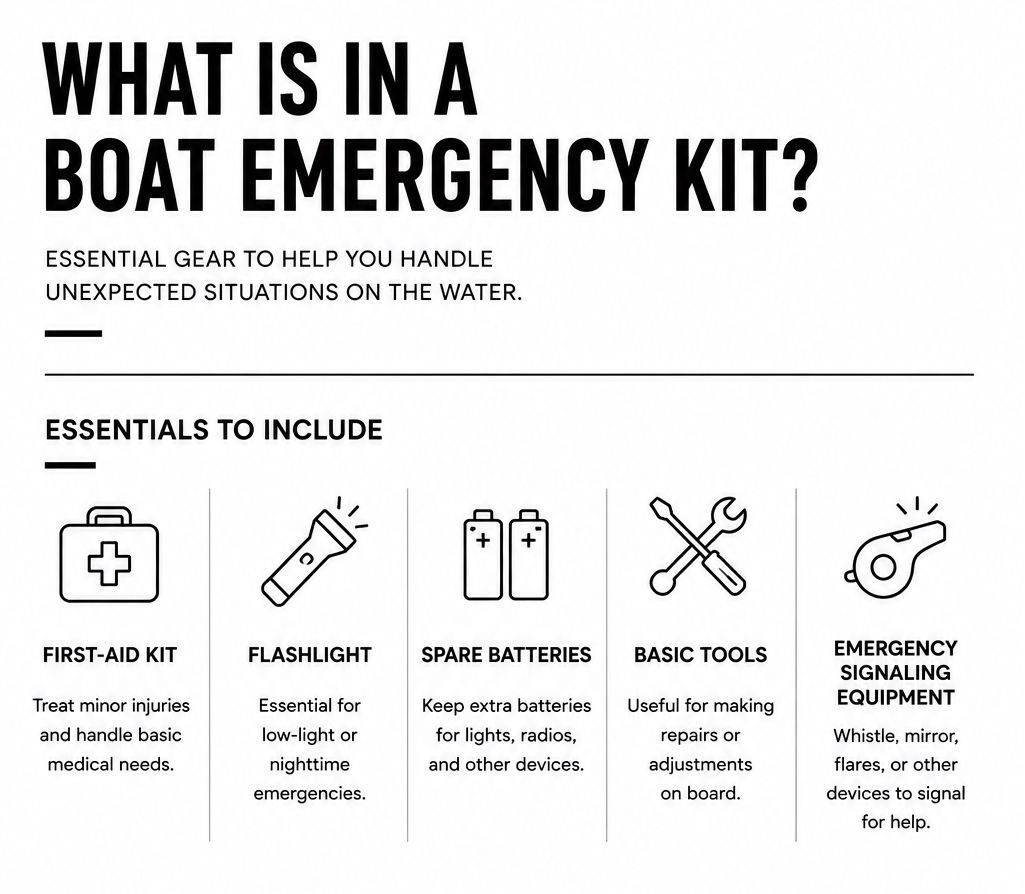
Some of the items you may need to purchase separately include:
- life jackets;
- a throwable flotation device for someone in the water;
- portable fire extinguishers;
- visual distress signals for emergencies;
- a first-aid kit;
- a VHF radio;
- a flashlight and basic tools;
- emergency location devices, such as an EPIRB or PLB, for certain types of trips.
Not all of these items are required on every boat. Some are part of legal requirements, while others provide an additional layer of preparedness for unexpected situations.
Let’s take a closer look at the difference.
What Safety Equipment Do First-Time Boat Owners Most Often Forget?
For first-time boat owners, one of the most common mistakes happens before the first trip: assuming the boat already came with everything needed for safe operation.
Life jackets deserve special attention. You need the right number, the correct sizes for everyone onboard, and they must be stored where they can be reached quickly.
Visual distress signals should also be checked, especially because some have expiration dates and should not be left forgotten in a compartment for years.
Just as important is knowing where each safety item is stored.
In an emergency, you do not want to waste time looking for the fire extinguisher, figuring out where the life jackets are, or trying to remember which compartment holds the first-aid kit.
How Often Should Boat Safety Equipment Be Inspected or Replaced?
Buying boat safety equipment once does not mean the job is done.
Before heading out, visually inspect the main safety items. Make sure life jackets are in good condition, navigation lights are working, and emergency gear is stored in the proper locations.
Fire extinguishers and visual distress signals should be checked for their condition and applicable expiration dates. Inflatable safety equipment should be maintained according to the manufacturer’s recommendations.
It is also important to periodically test VHF radios, flashlights, and other battery-powered devices.
This simple routine helps keep your boat prepared whenever you decide to spend a day on the water.
New Boat Safety Equipment Checklist: What to Confirm Before Your First Trip
At NX Boats, we understand that the onboard experience begins before you ever leave the marina.
Before your first trip, make sure to check:
- which safety equipment came with the boat;
- whether there is a properly sized life jacket for each person onboard;
- whether your boat requires a throwable flotation device;
- which visual distress signals are required;
- whether the fire extinguishers are appropriate and in good condition;
- whether the navigation lights and horn are working properly;
- whether safety equipment is stored in easily accessible locations;
- whether you should add a VHF radio, first-aid kit, EPIRB, or PLB;
- which state and local boating regulations apply in your area.
Getting to know your boat is also part of this preparation. Knowing where safety equipment is stored and how to access it can give both the operator and everyone onboard greater confidence on the water.
Conclusion
A new boat may come with several built-in safety systems, but that does not mean all the boat safety equipment needed for your first trip will already be onboard.
Life jackets, signaling equipment, and other safety items should be checked based on your boat, the people joining you, and where you plan to operate it.
Once you have your initial checklist in place, the routine becomes much simpler. Before each trip, check the condition of your safety equipment, your route, and the items needed for that particular outing.
Learn even more with our article on essential safety tips for first-time yacht owners.
FAQ
Does a new boat come with all the required safety equipment?
A new boat may include built-in safety systems such as navigation lights and an engine cut-off switch. However, portable gear like life jackets, throwable flotation devices, visual distress signals, and fire extinguishers may not be included.
What comes with the boat varies by manufacturer, model, and dealer, so always check that you have the safety equipment required by law before heading out.
How Many Safety Equipment Items Do You Need Based on Boat Length?
Boat length helps determine which safety equipment is required, but there is no fixed number of items for each size. The USCG evaluates equipment by category. For example, larger boats may need more fire extinguishers or different sound-producing devices.
The bigger and more complex the boat, especially those with cabins, permanent tanks, or onboard systems, the more important it is to check the specific safety requirements for that vessel.
Does Required Safety Equipment Change Between Lakes and Coastal Waters?
Yes. Required safety equipment can change depending on where you operate your boat. For example, certain boats operating on U.S. coastal waters, the Great Lakes, territorial seas, and connected waters must carry approved visual distress signals.
Requirements may differ on inland lakes. State laws can also add their own rules, so always check both U.S. Coast Guard requirements and local regulations before heading out.
Required vs. Recommended: What Is the Difference?
Required safety equipment includes items mandated by federal or state law, such as life jackets, fire extinguishers, or visual distress signals when applicable.
Recommended equipment is not always legally required but can improve safety and emergency preparedness, such as a first-aid kit, VHF radio, flashlight, or EPIRB. Your checklist should include all legally required gear plus recommended items appropriate for where and how you plan to boat.

Um novo mundo está surgindo, e a NX Boats faz parte dessa mudança, estamos revolucionando o design, unindo conforto e modernidade tudo isso por que queremos proporcionar a melhor experiência para quem navega com uma NX.