



LATEST NEWS
Deck Boat: versatility, space, and comfort for freshwater and saltwater recreation
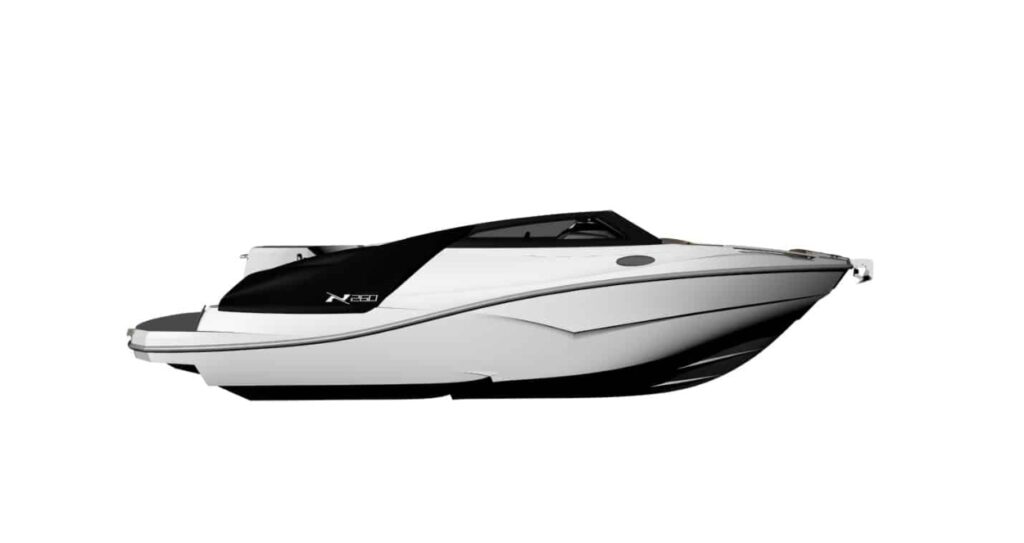
Among the various boating models, the deck boat stands out for its spaciousness, versatility, and ability to host larger groups comfortably.
Designed to maximize usable onboard space, it offers ample social areas without sacrificing performance or navigability, making it suitable for recreational and sporting use in both freshwater and saltwater.
In this article, we explore its concept, structural characteristics, differences from other models, and ideal applications.
What is a deck boat
The term “deck boat” emphasizes the deck as the main design element, with seating and leisure areas occupying much of the layout. Its flat bow increases passenger capacity and comfort while cruising.
This format is especially popular on lakes, reservoirs, and protected coastal waters, where stability and spaciousness are prioritized over rough-sea performance.
Main characteristics of this type of vessel
This vessel’s architecture combines structural and functional features that set it apart from other recreational boats.
An elevated gunwale extending to the bow allows full use of the deck without compromising safety.
Its modified V-hull balances stability and performance, ensuring comfortable navigation in varied conditions, while typically offering greater passenger capacity than boats of similar length.
Difference between deck boat and other models
The main difference between deck boat and other recreational models is its space distribution and functional focus. Unlike traditional bowriders, it extends the usable area to the bow, increasing passenger capacity.
Compared to pontoon boats, it delivers better performance and handling in choppier waters due to its modified V-hull.
While still offering more open space than sport boats or cuddy cabins, which prioritize speed or enclosed accommodations, deck boats maintain a strong balance between performance and comfort.
Comfort and gathering areas
Comfort comes from the spacious layout and quality finishes, with adjustable sun and shade systems that protect without sacrificing the open feel.
Features like removable bow tables, cup holders, and sound systems enhance the onboard experience, while a private bathroom in larger models reduces the need to return to the marina.
Natural ventilation and panoramic views further elevate comfort and connection with the water.
Passenger Capacity and Layout
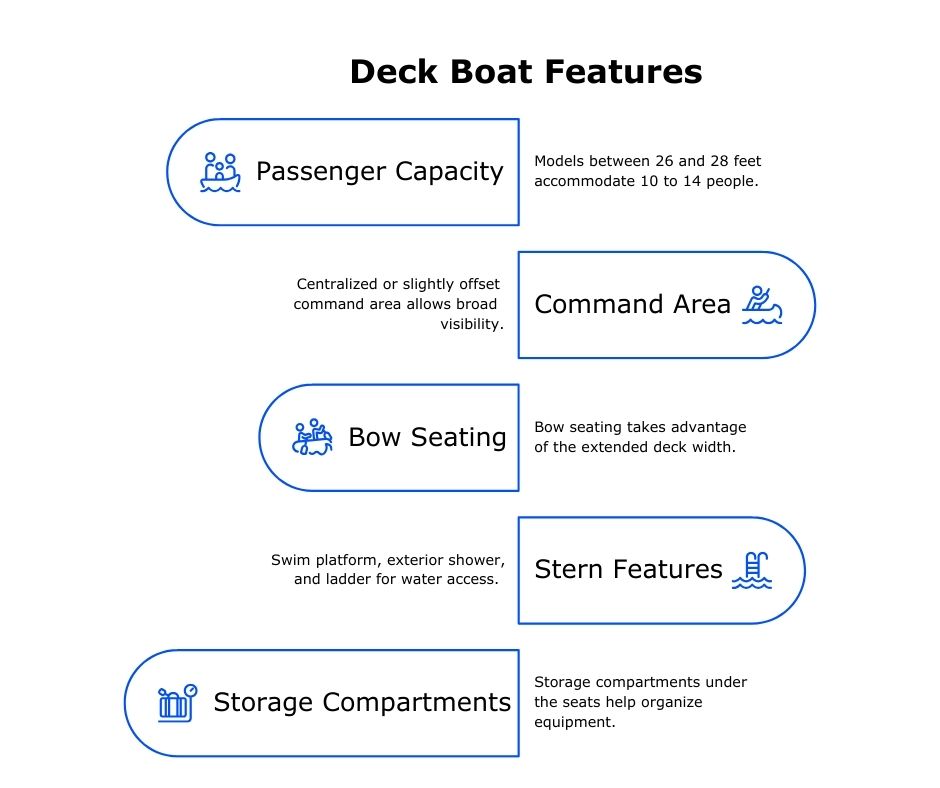
Passenger capacity varies by length and design, but 26 to 28-foot models typically accommodate 10 to 14 people comfortably.
The layout usually features a centralized or slightly offset helm with wide visibility and easy access throughout the vessel.
Extended bow seating creates generous gathering space, while the stern often includes a shower and ladder for convenient water access.
Storage compartments under the seats help keep equipment organized without reducing usable space.
Most common engine types
The choice of engine for a deck boat depends on the size, weight, and intended use of the vessel: pleasure or business?
Engines with power between 250 and 400 HP are typically ideal for most leisure-oriented models.
NX Boats customers can choose between inboard motorization, installed inside the vessel’s hull, or outboard (stern motor), which is mounted on the exterior of the boat, typically at the stern.
Ideal use: leisure, outings, and sports
This vessel is ideal for recreational use in lakes, reservoirs, rivers, bays, and protected coastal waters, where its spaciousness and stability can be fully enjoyed. It’s well suited for family outings and social events, offering ample room for larger groups.
The stern platform makes swimming and water activities easy, while good visibility and adequate power support water sports. Its stability at rest also makes it a practical base for recreational fishing.
Read more: Luxury cruise boat: exclusive experiences, exceptional comfort, and refined standards at sea
Advantages and limitations of the deck boat
This vessel offers a series of benefits for recreational activities but also presents some limitations that should be considered.
Check out the main advantages and disadvantages of this type of boat below:
Advantages:
- Ample gathering space, ideal for larger groups
- Superior passenger capacity, allowing more people on board
- Versatility for different recreational activities, such as fishing, outings, water sports, and relaxing at beaches
- Easy circulation, especially for children and seniors
- Open layout that favors supervision and social interaction
- Hull configuration with adequate navigability for most recreational conditions
- Balanced performance between comfort and speed
Limitations:
- Less protection against weather conditions, such as rain and wind, due to the absence of an enclosed cabin
- Prioritization of available on-board space, forgoing overnight cabins and prioritizing more spacious and comfortable areas for gathering and leisure
- Constant exposure to sun and weather, requiring frequent care of upholstery and finishes
Read more: How Fast Do Speedboats Go? Everything you need to know
For whom this model is recommended
The deck boat is ideal for families and groups who value social interaction, comfort, and versatility.
It suits those looking for a single vessel capable of handling recreational outings, water sports, occasional fishing, and social events, especially with larger groups on board.
However, for longer trips or rougher conditions, larger boats with enclosed cabins are more appropriate.
Deck boat example: NX 260 Evolution
The NX 260 Evolution is a premium example of a vessel that incorporates the concepts of spaciousness, versatility, and comfort characteristic of deck boats, adapted to the excellence standard of NX Boats.
At 26 feet, this boat stands out for offering interior space comparable to larger vessels, comfortably accommodating up to 12 daytime passengers.
With 200 liters of fuel and 90 liters of freshwater capacity, it provides good autonomy for leisure and water sports.
Engine options range from 250 to 350 HP, and features like a private bathroom and well-designed social areas make the NX 260 Evolution compact yet highly comfortable and stylish.
Conclusion
Open deck represents an intelligent choice for boaters who value spaciousness, versatility, and social comfort on board. The open deck format maximizes usable space without compromising navigability, offering complete recreational experiences in freshwater and saltwater.
The combination of superior passenger capacity, functional layout, and balanced performance makes this vessel ideal for families, groups of friends, and owners seeking to serve multiple purposes.
Want to understand which type of premium vessel best meets your needs? Explore our complete guide on luxury boats and discover how to choose the ideal model for your navigation profile.
Frequently Asked Questions (FAQ)
What differentiates a deck boat from a regular boat?
The deck boat has an elevated gunwale that extends to the bow, maximizing gathering space and passenger capacity. Regular boats generally have a bow with limited seating area.
What is the average passenger capacity?
It varies according to length, but models between 26 and 30 feet generally accommodate 10 to 16 daytime passengers with adequate comfort.
Is it possible to practice water sports?
Yes, adequate power and the stern platform facilitate activities such as wakeboarding, water skiing, and tubing. The captain’s broad visibility is an additional advantage.
Does a deck boat consume a lot of fuel?
Consumption varies according to motorization, weight, and usage profile. Models with powerful engines and high-speed use tend to consume more fuel than in economical navigation.

Um novo mundo está surgindo, e a NX Boats faz parte dessa mudança, estamos revolucionando o design, unindo conforto e modernidade tudo isso por que queremos proporcionar a melhor experiência para quem navega com uma NX.