



LATEST NEWS
Large Boat: sizes, operation, and details
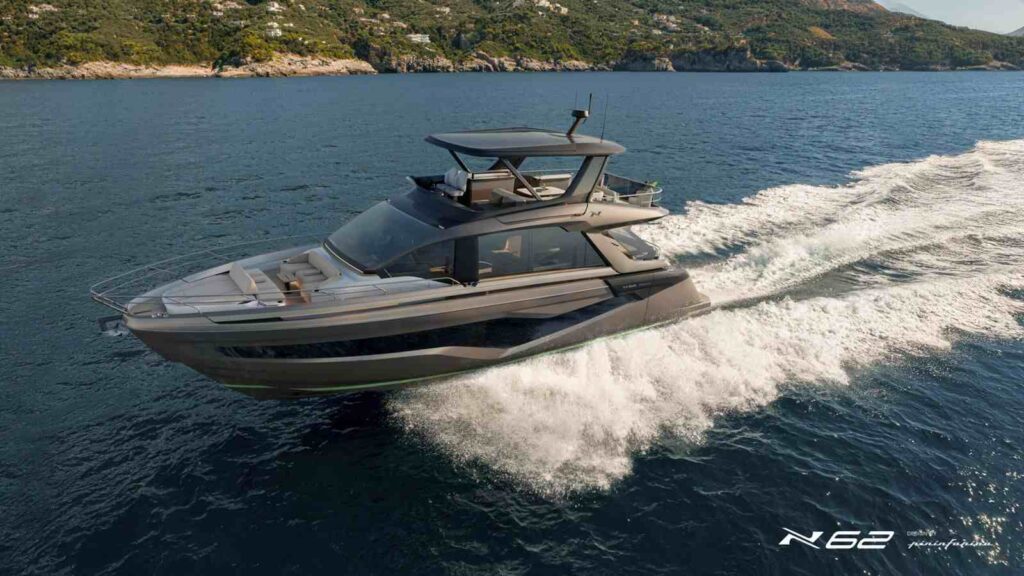
Large boats expand space, range, comfort, and possibilities on board, but the change in size also alters the logic of operation and ownership.
More length almost always brings new systems, greater displacement, marina requirements, and a broader technical routine.
That’s why anyone thinking about moving up a category needs to look beyond just the extra feet.
The decisive point is understanding when dimensions, beam, engine power, systems, and navigation area start to demand more experience, infrastructure, and planning.
What Is Considered a Large Boat?
There is no universal size that defines a large boat. The concept depends on the vessel’s structure, range, operational complexity, and, above all, how the boat will be used.
This perception also helps explain the so-called “Bigger Boat Fever,” or Two-Foot-Itis. The term describes the feeling that your current boat needs just a bit more space, stability, or comfort, which leads many owners to consider successive size upgrades.
In practice, this phenomenon shows that “large” is a relative definition. A model that seems spacious today may feel limiting when the number of guests, the length of trips, or onboard comfort expectations change.
That’s why, before looking for a bigger boat, the most important step is identifying which needs the new vessel actually needs to meet.
What Makes a Boat “Large” Beyond Its Length?
Length is just one of the dimensions that determine a boat’s complexity. Two vessels of similar size can require quite different operating routines.
Check out the main factors:
| Factor | Why It Matters |
| Beam | A wider beam expands onboard space, but also affects docking, marina slips, and transport. |
| Displacement | More mass changes the vessel’s response during maneuvering, acceleration, and deceleration. |
| Propulsion | The number of engines, power, and propulsion configuration influence performance, control, and maintenance. |
| Onboard systems | Generator, climate control, hydraulic systems, electrical equipment, and electronics expand the technical structure. |
| Accommodations | Cabins, galley, and a full bathroom allow for longer stays and add support systems. |
| Range | Greater range requires planning for fuel, energy, water, and provisions for longer trips. |
So, what really makes a boat “large” isn’t just its external dimension, but the combination of structure, onboard features, and operational demands.
When Do Large Boat Maintenance Costs Increase Significantly?
There is no single point at which maintenance automatically increases. The change usually occurs when the boat incorporates more systems and equipment.
Generator, climate control, refrigeration, shore power, battery banks, hydraulic systems, and multiple engines add components to the inspection and service routine.
That’s why the most relevant difference isn’t just about size. It lies in the quantity and complexity of the equipment needed to sustain the desired level of comfort, performance, and range.
Does a Large Boat Require a Special License?
Not necessarily. Requirements vary by country and may take into account factors such as dimensions, power, navigation area, intended use, and the private or commercial nature of the operation.
In some jurisdictions, larger or more powerful vessels may require additional certifications, practical training, or proof of competency. Offshore and international navigation may also involve specific documentation.
Before taking command of a large boat, it’s essential to check the requirements that apply to the vessel’s registration, navigation area, and type of operation.
Is a Large Boat Harder to Dock?
In general, a larger vessel requires more planning during docking. Mass, displacement, beam, wind, and current directly affect the boat’s response at low speed.
Propulsion configuration also makes a difference. Multiple engines, joystick controls, and bow thrusters can provide greater precision, but the operator still needs to understand how the boat responds under different conditions.
In marinas with limited space, preparation is essential. Fenders, lines, and crew roles should be set before the approach.
How Much Experience Do You Need to Handle a Large Boat?
There is no universal number of hours of boating experience required to take command of a large boat. The level of preparation depends mainly on the gap between previous experience and the new vessel.
A change in size can also bring more power, new electronic systems, a different engine configuration, and distinct responses during maneuvers.
That’s why it’s important to know the stopping distance, turning radius, anchoring behavior, controls, electronics, and emergency procedures of the chosen model.
Hands-on training aboard the actual vessel can make this transition safer and more predictable.
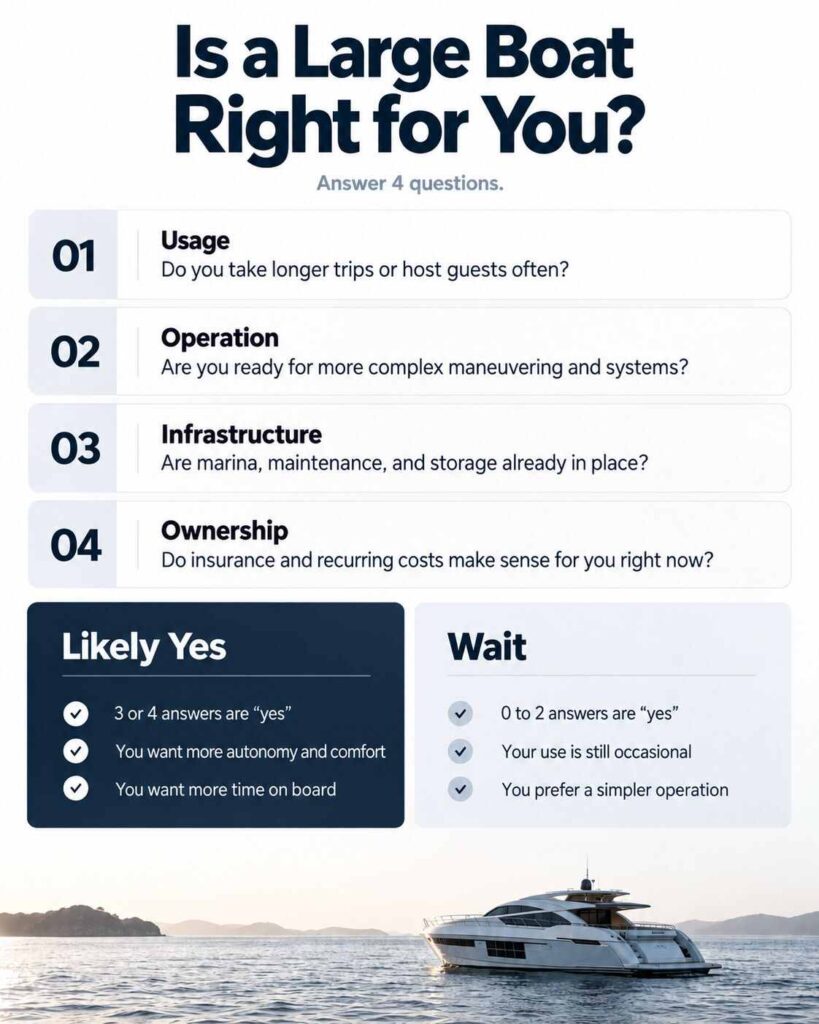
Can a Large Boat Be Towed on a Trailer?
In some cases, yes. However, transport depends on dimensions, total weight, trailer capacity, towing vehicle, and road regulations.
As the vessel grows in size, marina storage, dry storage, or specialized transport start to make more sense than frequent trailer hauling.
The beam also deserves attention. Depending on local regulations, certain dimensions may require special permits for road travel.
For this reason, transport feasibility should be assessed together with the storage location before choosing the boat.
How Much More Does Large Boat Insurance Cost?
Insurance for a large boat tends to exceed that of smaller models, with annual reference rates ranging from $1,200 to over $70,000.
The premium varies according to size, insured value, power, navigation area, owner experience, intended use, and level of coverage selected.
For larger yachts, higher costs reflect not only the asset’s value, but also the operational complexity and associated risk.
Is a Large Boat Too Big for a First-Time Owner?
Buying a large boat as your first boat can be challenging, but it’s not impossible. It’s important to consider a few factors before making this decision.
A bigger boat can offer more comfort and space for friends and family, but it also requires more skill to maneuver and maintain. If you’re willing to invest time in learning and perhaps hire someone experienced to help out at first, it can be a rewarding experience.
However, if you’d rather start slow, a smaller boat might be a more practical choice for building confidence and experience. In any case, it’s important to assess your budget, available time, and willingness to learn.
Read more: Boat Types: complete guide to choosing the right boat for every lifestyle
Conclusion
Large boats expand comfort, range, and usage possibilities, but they also require a broader assessment of operation, maintenance, and infrastructure.
The best size transition combines technical preparation with a project that matches the routine and expectations of those who will be on board.
If you’re considering sizing up, explore the NX Boats models and compare layouts, configurations, engine options, and onboard solutions.
The ideal model isn’t simply the biggest one. It’s the one whose space, performance, and technology match the experience you’re looking for on the water.
FAQ
What is a large boat called?
There isn’t a single term. Depending on the design and purpose, a large boat can be called a motor yacht, cabin cruiser, sport yacht, sailing yacht, or trawler.
The terminology tends to reflect the boat’s configuration and purpose more than just its dimensions.
What are the different types of large boats?
Among the main categories are motor yachts, cabin cruisers, sport fishing boats, trawlers, catamarans, and sailing yachts.
Each design serves different priorities, ranging from performance and offshore fishing to extended trips, comfort, and life on board.
What is another word for a large ship?
In the recreational world, yacht is one of the most common terms for a larger vessel with a complete structure for leisure and living aboard.
Expressions like motor yacht, luxury yacht, and sport yacht make the definition more specific according to the configuration and purpose.

Um novo mundo está surgindo, e a NX Boats faz parte dessa mudança, estamos revolucionando o design, unindo conforto e modernidade tudo isso por que queremos proporcionar a melhor experiência para quem navega com uma NX.